We have separation of church and state. That doesn’t require pretending that religion doesn’t exist.
Walk into any American courthouse and you’ll find yourself navigating a curious cultural contradiction. The building itself likely bears classical architectural elements—columns that echo ancient Greek temples, friezes that recall Rome’s civic grandeur. Inside, the proceedings unfold according to legal principles inherited from centuries of English common law, itself deeply informed by Christian concepts of justice and human dignity. Yet should anyone dare reference the moral framework that gave birth to these institutions, they risk accusations of violating the sacred wall between church and state.
This peculiar circumstance—where we benefit from our religious inheritance while pretending it doesn’t exist—has become one of the stranger features of American civic life. Somewhere along the path from ensuring freedom of religion to enforcing a kind of cultural amnesia about religion, we’ve created a society that seems almost embarrassed by its own moral foundations.
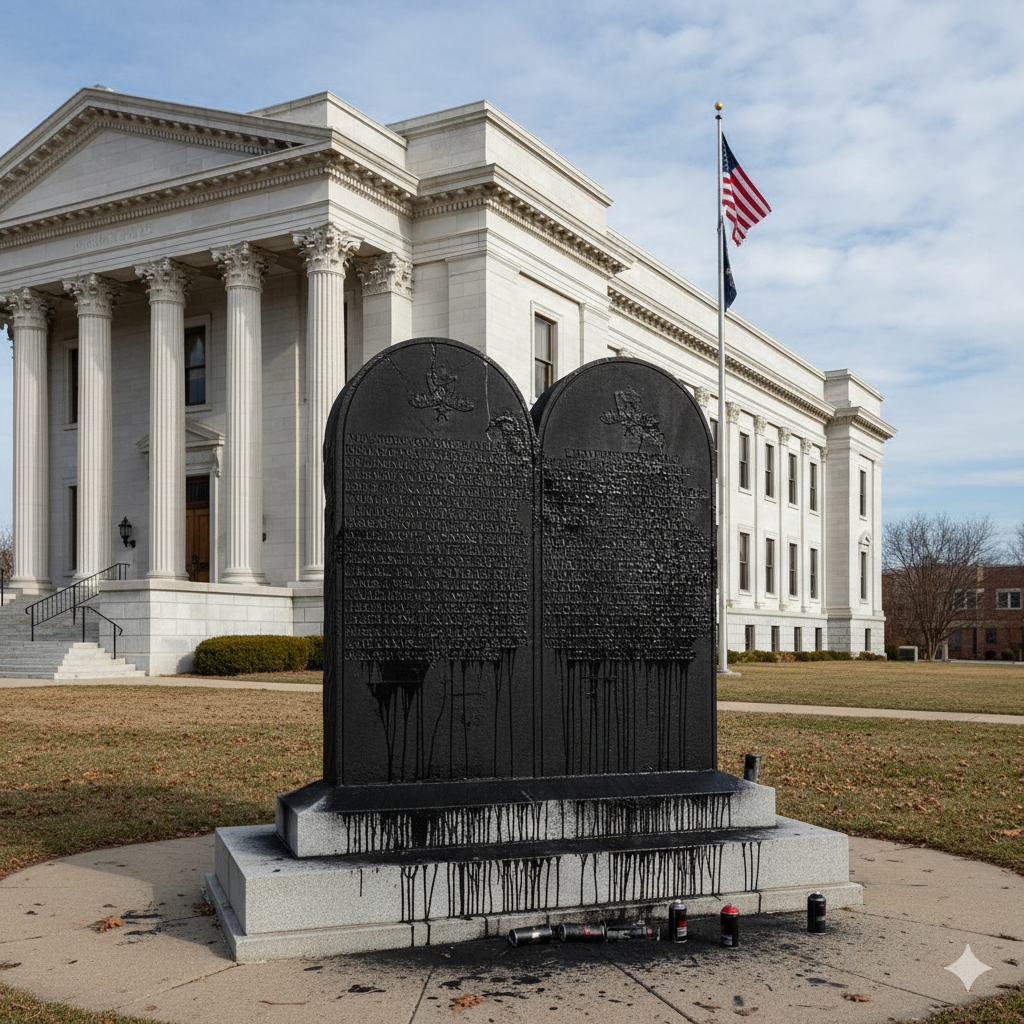
What does separation of church and state actually mean?
The confusion begins with a misreading of what separation of church and state actually requires. The First Amendment prevents the establishment of official religion and protects free exercise of faith. But this constitutional principle, designed to protect religious liberty, has morphed in practice into something quite different: an unstated assumption that only secular values deserve recognition in our shared cultural space.
Consider how we approach moral education. A teacher can discuss the philosophical insights of Aristotle or Kant, explore the ethical frameworks of John Stuart Mill or John Rawls, but the moment she references the parable of the Good Samaritan—arguably one of the most powerful explorations of moral obligation ever conceived—she enters problematic territory. The wisdom is identical; only its source has changed. Yet we’ve created a system where the secular packaging makes moral instruction acceptable while the religious packaging makes it suspect.
This represents a profound misunderstanding of what actually shaped American character. While the United States is not, strictly speaking, a Christian nation in any legal or constitutional sense, its founding and development were undeniably influenced by Christian values. The emphasis on human dignity that underlies our political system, the notion that all people possess inherent worth regardless of social position, the idea that power should be constrained by moral law—these concepts didn’t emerge from thin air. They grew from soil cultivated by centuries of Christian thought about human nature and social obligation.
Without our religious tradition, our understanding of our culture is hollow
The tradition of self-criticism that enables American democracy to reform itself also owes much to Christian moral frameworks. The abolitionists who challenged slavery, the civil rights leaders who demanded racial equality, the reformers who insisted on labor protections—they drew heavily on religious language and concepts to make their case. Martin Luther King Jr.’s “Letter from Birmingham Jail” is incomprehensible without understanding the Christian tradition of prophetic witness that informed his moral vision.
This doesn’t diminish the contributions of other traditions. Buddhist insights into the nature of suffering and the cultivation of compassion offer profound wisdom about human psychology and social harmony. Jewish traditions of questioning and ethical reasoning have enriched Western intellectual life immeasurably. Islamic concepts of social justice and communal responsibility provide valuable perspectives on economic and political organization.
The point isn’t that Christianity deserves special status, but that all these traditions offer insights that remain valuable even to those who reject their metaphysical claims. The parables of Jesus, the koans of Zen masters, the rabbinical debates of the Talmud—these represent thousands of years of careful thinking about moral problems that persist regardless of one’s religious beliefs. When we banish such wisdom from our cultural conversation, we impoverish ourselves intellectually and spiritually.
Europe offers an instructive example of this dynamic. Most European societies are now thoroughly secular in their public life, yet their character and values remain profoundly shaped by their Christian heritage. The commitment to social democracy that characterizes Scandinavian politics owes much to Lutheran concepts of community responsibility. French republican ideals, despite their explicit secularism, bear the imprint of Catholic social thought. Even the most aggressively atheistic European intellectuals operate within conceptual frameworks inherited from centuries of Christian moral reasoning.
The peculiar American solution—pretending that religious traditions haven’t shaped our values while continuing to benefit from the moral capital they created—satisfies no one and impoverishes everyone. Religious believers feel marginalized from public discourse about the very values their traditions helped create. Secular citizens are deprived of access to some of humanity’s most sophisticated thinking about ethics and meaning. Society as a whole loses the shared reference points that enable meaningful conversation about moral questions.
Religion has given us much of our common ethical language
This cultural impoverishment becomes particularly problematic when we confront challenges that require not just technical solutions but moral clarity. The parable of the talents offers insight into questions of economic inequality and social responsibility. The Buddhist concept of interdependence illuminates environmental challenges. The Jewish tradition of arguing with God provides models for how citizens might engage critically with authority while maintaining respect for social institutions.
None of this requires abandoning secular governance or privileging any particular religious viewpoint. The state should indeed refrain from making metaphysical claims or endorsing specific theological positions. But there’s an enormous difference between the government remaining neutral on religious questions and the culture pretending that religious traditions have nothing to offer public discourse.
What we need is a more sophisticated understanding of how religious wisdom can inform secular conversation. This means recognizing that moral insights don’t lose their validity simply because they emerge from religious contexts. It means acknowledging that many of our most cherished values—human dignity, equal treatment, care for the vulnerable—have deep religious roots. It means creating space for religious voices in public discourse while maintaining appropriate boundaries around government action.
The alternative is a kind of cultural amnesia that leaves us rootless and confused about our own moral commitments. When we strip away the stories, symbols, and traditions that have shaped our understanding of right and wrong, we don’t create a neutral space—we create a vacuum that gets filled by whatever ideology proves most aggressive in claiming the territory.
A truly pluralistic society doesn’t banish religious wisdom from public consciousness but finds ways to make its insights accessible to believers and skeptics alike. This requires religious communities to articulate their moral vision in language that speaks to universal human concerns. It requires secular citizens to recognize that dismissing religious perspectives impoverishes rather than enriches our common discourse. Most importantly, it requires all of us to distinguish between the legitimate constitutional requirement that government remain neutral on religious questions and the illegitimate cultural assumption that religious traditions have nothing valuable to contribute to our shared moral conversation.
The courthouse with its classical columns points toward what’s possible: a public architecture that draws on the best of human tradition without requiring anyone to accept its original metaphysical premises. We can appreciate the moral beauty of the Good Samaritan story without embracing Christian theology, just as we can value Buddhist compassion practices without accepting Buddhist cosmology. What we cannot do, without significant loss, is pretend that such traditions have nothing to teach us about the enduring questions of how to live well together.