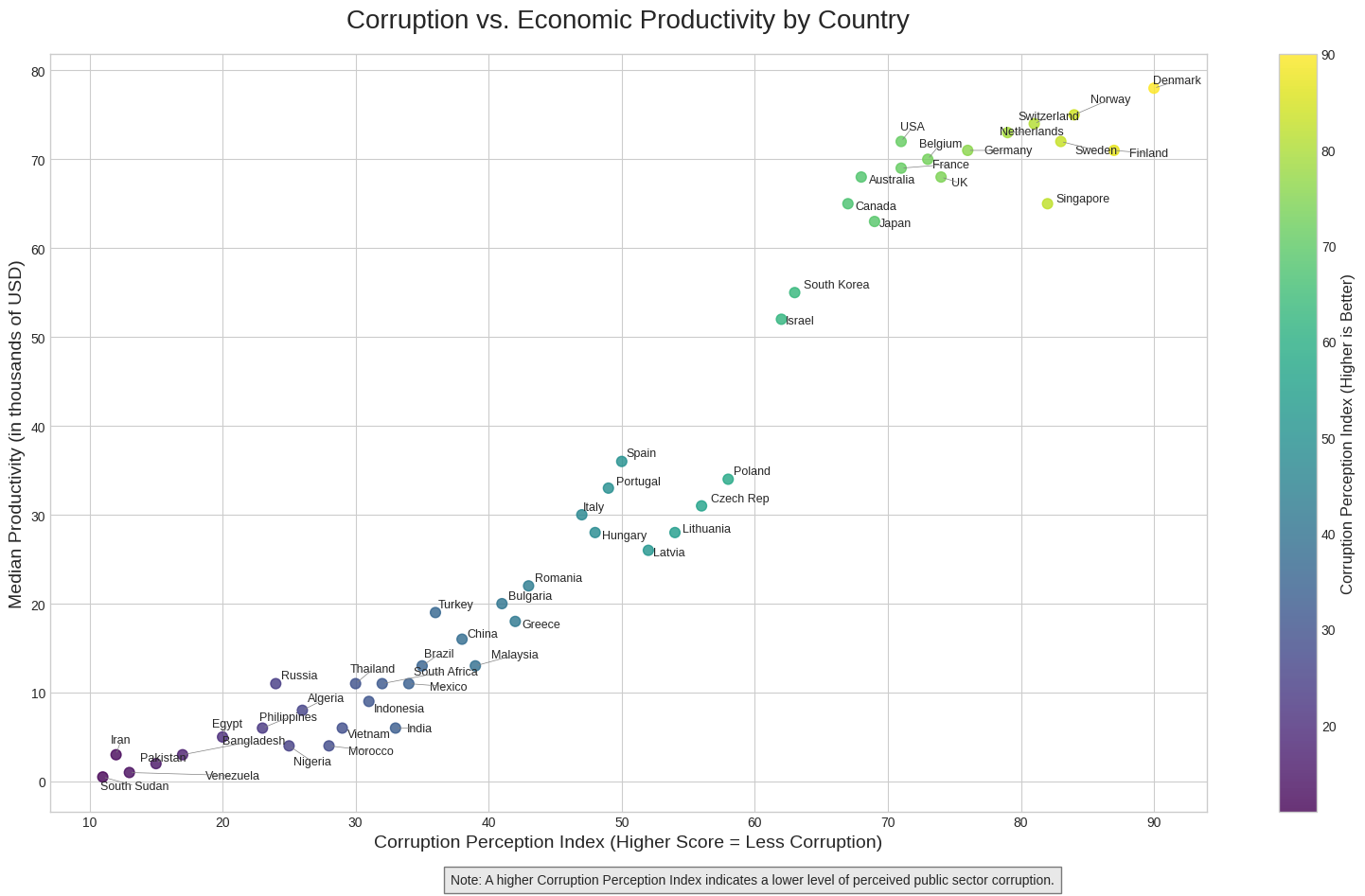
In a corrupt society you can’t plan for anything
Maria’s father was dying in a Jakarta hospital when the doctor told her that the surgery he needed wasn’t available—not because the hospital lacked the equipment or expertise, but because the surgical suite was “under maintenance.” The maintenance supervisor, a thin man with gold teeth, suggested that a “facilities fee” might expedite repairs. Maria emptied her savings account. Two days later, the same supervisor mentioned that the anesthesiologist required additional “certification payments” before he could proceed. Maria sold her jewelry. Then the head nurse discovered that the surgical instruments needed “special sterilization” that would cost extra. Maria borrowed money from relatives.
Each official treated her desperation as a business opportunity. Each delay brought her father closer to death while she scrambled to find more money for people who held her family’s fate in their hands and felt no obligation to help her beyond what she could pay. The surgery that should have cost $500 ended up costing $3,000, and her father died anyway—not from his illness, but from the delay caused by officials who turned a medical emergency into a prolonged shakedown.
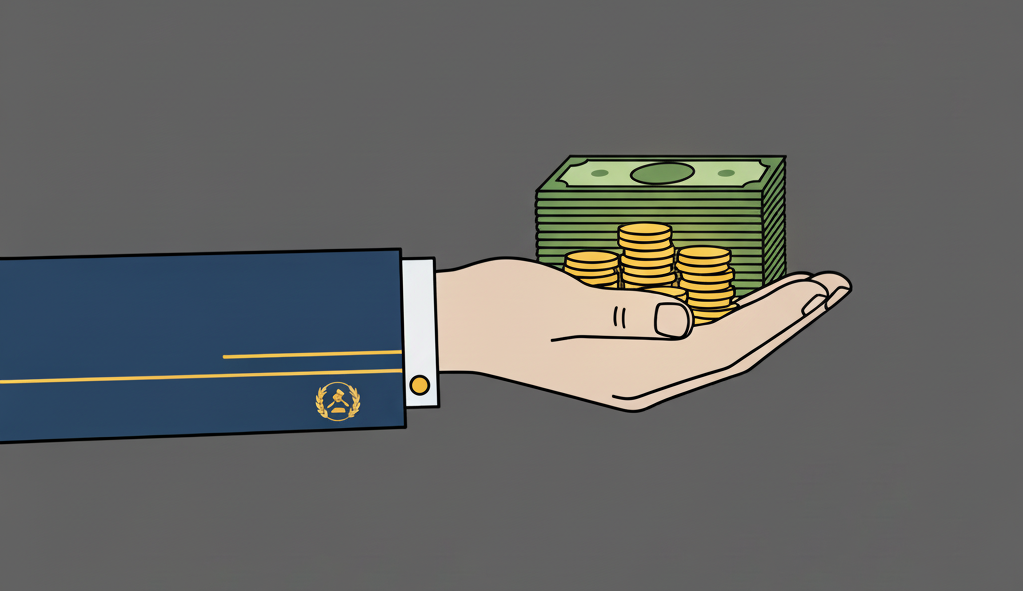
This nightmare was everyday reality in Singapore during the 1960s, when it was a corrupt backwater with a per capita income lower than Jamaica’s. Every interaction with government meant running a gauntlet of officials with their hands out. Every permit, every license, every approval came with an unofficial price tag. People’s lives hung in the balance while clerks and inspectors extracted whatever they could from citizens who had no choice but to pay.
Then something remarkable happened. Singapore’s new government declared war on corruption with an almost fanatic intensity. Officials who accepted bribes didn’t just lose their jobs—they went to prison. Government contracts got awarded through transparent bidding processes. Civil servants advanced based on merit rather than political loyalty. Within a generation, Singapore transformed from a developing country plagued by graft into one of the world’s most prosperous and efficiently governed societies.
What made Singapore’s transformation possible was recognizing that every corrupt transaction creates ripple effects that extend far beyond the immediate participants. When Maria had to bribe hospital officials while her father died, it wasn’t just about the money she lost—it was about what that experience taught her about how power works and whether institutions can be trusted. When business contracts go to whoever pays the best bribes rather than whoever does the best work, it’s not just about economic inefficiency—it’s about what that teaches everyone about whether merit matters and whether honest effort gets rewarded.
Singapore’s leaders understood that corruption is a form of social poison that spreads through entire societies. Each corrupt transaction teaches people that rules don’t apply equally, that official promises can’t be trusted, and that success depends more on connections than competence. But corruption isn’t just about officials taking bribes—it’s also about the arbitrary and capricious use of authority, where officials make decisions based on personal whim, or indifference, rather than acting consistent with their agency’s role and mission. When people can’t predict how they’ll be treated by their own government, when identical situations produce different outcomes depending on which official you encounter, the social contract begins to dissolve. Citizens lose faith in their government, businesses can’t rely on fair treatment, and neighbors begin to suspect each other of working hidden angles. The economic waste is just the visible symptom of a deeper rot that makes complex societies increasingly impossible to sustain.
The numbers tell the story. Singapore’s GDP per capita has grown from $500 in 1965 to over $65,000 today—more than the US—representing one of the fastest sustained economic growth rates in human history. Their government operates with remarkable efficiency: infrastructure projects finish on time and under budget, regulatory approvals follow predictable timelines, public services work reliably. International businesses choose Singapore as their Asian headquarters precisely because they can plan investments based on clear rules rather than murky relationships.
This wasn’t achieved through some unique cultural advantage or natural resource windfall. It was the compound effect of eliminating the systematic distortions that corruption creates in how resources get allocated and decisions get made.
The American Mirror
Americans look at Singapore’s transformation with admiration, but we tend to think of it as a foreign success story with little relevance to our own situation. After all, we don’t have the crude corruption that plagued 1960s Singapore. You can get a driver’s license without paying a bribe. You can start a small business without greasing palms. Our police don’t openly shake down citizens for cash.
But Singapore’s lesson isn’t really about eliminating crude bribery—it’s about recognizing how systematic distortions in decision-making processes drain economic efficiency and undermine public trust. And when you start looking at American governance through that lens, the parallels become clear.
Consider how major business decisions actually get made in sectors that intersect with government regulation. A pharmaceutical company wants to get a new drug approved by the FDA. In a clean system, approval would depend entirely on whether the drug is safe and effective according to rigorous scientific standards. But in our system, the process involves hiring former FDA officials as consultants, funding think tank research that supports the company’s position, making strategic political contributions to legislators who oversee FDA budgets, and retaining lobbying firms with connections to key decision-makers.
Success depends partly on meeting scientific standards and partly on executing a sophisticated influence campaign that most Americans never see. The approval process has been corrupted by a parallel political process that has nothing to do with protecting public health.
This pattern repeats across every sector where business intersects with government. Defense contractors spend more on lobbying than some countries spend on their entire military budgets. Energy companies hire former Environmental Protection Agency officials who understand the regulatory process from the inside. Technology companies fund university research that supports their policy positions while employing armies of former government officials who can navigate regulatory agencies.
The Influence Economy
What emerges is a system that looks nothing like the crude corruption Americans associate with developing countries, but produces remarkably similar effects. Companies succeed not just by building better products or offering better services, but by purchasing political influence through legal channels. The most efficient supplier might lose out to the one with better political connections. The most innovative technology might get delayed while a competitor’s inferior product gets fast-track approval because they played the influence game more effectively.
All of this costs money—enormous amounts of money. The pharmaceutical industry spends roughly $375 million annually on lobbying—nearly four times what it spent just two decades ago and more than any other industry. The defense industry employs more former Pentagon officials than some major corporations have total employees. The financial sector’s political expenditures dwarf the GDP of small countries. These aren’t incidental business expenses—they’re strategic investments in purchasing favorable government treatment.
And like all business expenses, these costs get passed along to consumers. When drug companies spend hundreds of millions on political influence, those costs show up in prescription prices. When defense contractors maintain enormous lobbying operations, taxpayers pay for those expenses through inflated contract prices. When financial companies hire armies of former regulators, banking customers pay those costs through fees and reduced services.
The difference between this system and crude corruption isn’t moral—it’s procedural. In Lagos, you hand cash to a building inspector. In Washington, you hire the former building commissioner as a “consultant” and make substantial donations to political action committees. The inspector gets paid either way, but our system provides legal cover and procedural complexity that obscures what’s actually happening.
The Trust Deficit
Singapore’s leaders understood that this isn’t just an economic problem—it’s a social problem that compounds over time. When people begin to suspect that the game is rigged, that outcomes depend more on connections than competence, trust in institutions begins to erode. And when institutional trust erodes, the social cooperation that makes complex societies function starts to break down.
You can see this happening in real time. Polling shows declining confidence in virtually every major American institution—government, business, media, universities, even religious organizations. People increasingly assume that these institutions serve insiders rather than the public interest. They expect to get screwed when dealing with large organizations. They assume that official explanations are covering up private deals made behind closed doors.
This creates what economists call “high transaction costs”—everything takes longer and costs more because people have to spend enormous energy protecting themselves against being cheated. In high-trust societies, a handshake can seal a deal. In low-trust societies, you need lawyers, investigators, insurance, and elaborate enforcement mechanisms for the simplest transactions.
Singapore built its prosperity largely by becoming a high-trust society where contracts meant something, officials followed clear rules, and business could be conducted efficiently because people believed the system was fundamentally fair. As our own version of institutionally sanctioned corruption has normalized, that trust advantage has been steadily eroding.
When Families Become Fortresses
When societies lose trust in institutions, people retreat to the one social unit they hope they can still rely on: family. If you can’t trust the system to promote based on merit, you promote your relatives. If you can’t count on professional networks to be honest, you stick with blood relations. If institutions don’t protect your interests, you build family dynasties that can protect themselves.
This looks like a rational response to corruption, but it actually makes the problem worse. Family-based systems aren’t necessarily more trustworthy—they’re just more concentrated. When power stays within family networks, it becomes easier to extract rents from everyone outside those networks. Political dynasties, business empires built on nepotism, and professional networks organized around family connections all tend to become more corrupt over time, not less.
Moreover, mixing family relationships with economic interests creates toxic dynamics within families themselves. When your brother’s business success depends on your political position, family gatherings become strategy sessions. When your daughter’s career depends on maintaining the family’s influence network, parental love gets mixed up with professional obligation. Some of the most corrupt societies in the world are also the most family-oriented, precisely because family loyalty becomes a substitute for institutional integrity rather than a complement to it.
The Compound Cost
All of this adds up to massive economic waste that compounds over time. Every dollar spent on corruption—whether crude or institutionally sanctioned—is a dollar that doesn’t go toward something productive. Every hour spent navigating corrupt systems is an hour not spent creating value. Every talented person who becomes a political fixer instead of an engineer or teacher represents human capital diverted from useful work to rent-seeking.
Consider what happens when government contracts get awarded based on political connections rather than competitive bidding. The immediate waste is obvious—taxpayers pay more for worse results. But the long-term damage is more subtle: companies stop investing in the capabilities that would make them more competitive and instead invest in the relationships that will win them contracts. Engineers become lobbyists. Product development budgets get redirected to campaign contributions. The entire economy gradually shifts toward extracting value from political relationships rather than creating value through productive work.
This isn’t theoretical. You can see it happening in sectors where political influence has become normalized. Defense contractors whose products consistently fail to meet specifications but whose political connections ensure continued funding. Pharmaceutical companies that spend more on lobbying than research while drug prices soar. Infrastructure projects that routinely run over budget and behind schedule because political considerations override engineering ones.
Breaking the Cycle
Singapore’s example shows that this process can run in reverse. When corruption gets eliminated, resources flow back toward productive uses, institutional trust begins to rebuild, and economic growth accelerates. But this requires acknowledging that our polite, legalized version of influence-peddling is still corruption—and that it demands the same kind of systematic solutions that Singapore applied to its cruder version.
The key insight is that corruption isn’t just individual moral failure—it’s a systemic problem that requires systemic solutions. This is why we need genuinely independent, professionalized institutions that are insulated from political interference and financial pressure. When regulatory agencies are staffed by career professionals who advance based on competence rather than political connections, when procurement decisions are made through transparent processes that prioritize merit over influence, when policy analysis is conducted by people who can’t be hired by the industries they regulate, then the incentives begin to align with public rather than private interests.
Small-scale reforms that change these incentives can create virtuous cycles just as powerful as the vicious cycles that corruption creates. When government contracting becomes genuinely competitive rather than politically driven, companies start investing in productive capabilities again. When regulatory approval depends on meeting clear standards rather than hiring the right consultants, innovation flows toward actual improvement rather than political manipulation. When political influence becomes less valuable than professional competence, talented people redirect their energy toward useful work rather than rent-seeking.
This requires more than just passing anti-corruption laws or creating ethics oversight—though those help. It requires redesigning systems so that corrupt behavior becomes economically irrational rather than economically necessary. It means creating transparency that makes secret dealing impossible. It means building professional civil service systems that reward expertise over political loyalty. It means structuring regulatory processes so that decisions get made based on clear criteria rather than informal influence.
Most importantly, it means accepting that our current system of legalized influence-peddling is corrupting our institutions just as surely as briefcases full of cash corrupt institutions elsewhere. The mechanisms are more sophisticated, the legal cover is more elaborate, but the effects are the same: resources get misallocated, trust erodes, and everyone except the insiders pays the price.
We have a choice. We can continue pretending that our system of campaign contributions, lobbying, and revolving door hiring is fundamentally different from the crude bribery we condemn abroad. Or we can follow Singapore’s example and recognize that eliminating systematic distortions in how decisions get made—regardless of whether those distortions are legal—is the foundation of both prosperity and democracy.
The corruption tax isn’t inevitable. It’s a policy choice, though usually one that gets made through inaction rather than deliberate decision. Every time we accept that political influence is just “how things work,” every time we tolerate obvious conflicts of interest because the system provides legal cover, every time we let campaign contributions and lobbying expenditures determine policy outcomes because changing the system seems impossible, we’re choosing to keep paying this hidden tax.
But we can also choose to stop paying it. Singapore proved that even deeply corrupt systems can be reformed when leaders have the will to prioritize public interests over private ones. The question is whether we’re willing to build the kind of independent, professional, rigorous institutions that serve the public interest rather than private interests—and whether we’re honest enough to admit that anything less is just a more polite form of the corruption we criticize when we see it abroad.